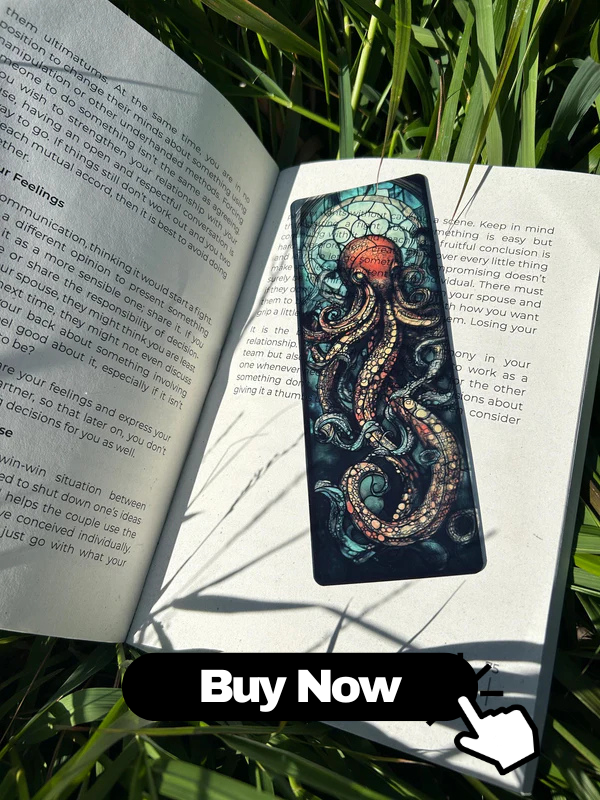
Reading multiple books at once can be a deeply rewarding habit—but it also creates a very practical problem: how do you keep track of where you are in every book, in every format, at every moment? This is where the right bookmarks become essential tools, not just pretty accessories. In this comprehensive guide, you’ll discover the best bookmarks for readers who juggle several books at the same time, how to organize them, and how to choose bookmark styles that match your reading habits, formats, and goals.
Why Multiple Bookmarks Matter for Multi‑Book Readers
If you’re someone who reads multiple books at once—perhaps a novel, a non‑fiction book, and a reference book—then a single bookmark simply isn’t enough. The more books you’re in the middle of, the more valuable a thoughtful bookmark system becomes.
- Prevent losing your place: Proper bookmarks reduce the temptation to fold pages, lay books face‑down, or rely on memory.
- Separate different types of reading: Use one bookmark style for casual reading, another for study or work, and another for long‑term reference books.
- Track progress across several titles: Multi‑book readers benefit from bookmarks that include page markers, page numbers, or progress scales.
- Support different reading locations: Keep dedicated bookmarks for bedside reading, commute reading, and desk reading.
- Improve focus and continuity: When you can instantly see where you left off, it’s easier to re‑enter the book’s world or argument.
For readers who love reading multiple books simultaneously, bookmarks become part of a broader personal reading system—a way to bring order and clarity to a rich, layered reading life.
Types of Bookmarks for Readers Who Read Multiple Books at Once
Not all bookmarks are created equal. Different designs serve different purposes, especially when you’re trying to manage several books at once. Below are the most useful bookmark types for multi‑book readers.
1. Classic Flat Paper or Card Bookmarks
These are the traditional bookmarks you find in bookstores and libraries. They’re simple, affordable, and highly customizable.
- Best for: General reading, fiction, light non‑fiction
-
Benefits:
- Easy to slip in and out of books
- Can include printed quotes, reading trackers, or book lists
- Lightweight and gentle on the book spine
-
Tips for multi‑book readers:
- Use distinct colors or designs for different genres (e.g., blue for non‑fiction, red for fiction).
- Write the book title on the back if you frequently remove bookmarks.
- Choose sturdy cardstock to withstand frequent movement between books.
2. Magnetic Bookmarks
Magnetic bookmarks fold over the page and snap shut, gripping both sides of the paper.
- Best for: Commuters, readers who carry books in bags, parents reading around kids
-
Benefits:
- Stay firmly in place, even when books are jostled
- Can mark exact lines on a page
- Compact and great for smaller paperbacks
-
Tips for multi‑book readers:
- Keep a set of matching magnetic bookmarks reserved for one “reading series” (e.g., your current stack of professional development books).
- Use different shapes for different purposes: arrows for key sections, tabs for chapter breaks.
3. Ribbon or String Bookmarks
Ribbon bookmarks can be attached to the book or used loosely. Many hardcover editions come with built‑in ribbons.
- Best for: Long‑term reading projects, Bibles, classics, reference books
-
Benefits:
- Elegant and low‑profile
- Easy to move between chapters
- Can be combined with index tabs for complex reading
-
Tips for multi‑book readers:
- Attach multiple ribbons to one book to mark several key sections at once.
- Use different ribbon colors to indicate reading status (e.g., current chapter vs. future chapters to revisit).
4. Clip‑On and Page‑Grip Bookmarks
These bookmarks clip to the top or side of the page, sometimes made of metal or plastic.
- Best for: Technical readers, study sessions, dense non‑fiction
-
Benefits:
- Secure hold without damaging pages (when designed well)
- Some include rulers or measurement markings—ideal for studying
- Good for marking diagrams, charts, maps
-
Tips for multi‑book readers:
- Use metal clips for thick textbooks and plastic clips for delicate novels.
- Limit the number of heavy clips per book to avoid stress on the spine.
5. Sticky Tabs and Index Flags
Sticky tabs are less about marking your current place and more about locating important sections across multiple books.
- Best for: Students, researchers, non‑fiction readers, language learners
-
Benefits:
- Color‑code themes, topics, or characters
- Thin and flexible; won’t warp the book
- Great for managing complex reading across many titles
-
Tips for multi‑book readers:
- Assign a tab color key across all your books (e.g., yellow = quotes, blue = statistics, pink = key arguments).
- Use a traditional bookmark for your place and tabs to highlight specific pages.
6. Corner Bookmarks
Corner bookmarks slide over the edge of the page. They can be paper, felt, or leather.
- Best for: Casual fiction readers, children’s books, travel reading
-
Benefits:
- Won’t slip out easily
- Can be made at home (origami style)
- Fun, highly visible designs
-
Tips for multi‑book readers:
- Use different shapes or characters for each active book to quickly identify which bookmark goes where.
- Choose thin designs to avoid adding bulk to your book stack.
7. Functional Bookmarks with Extras
Some bookmarks are more than just markers; they include additional functions.
-
Examples:
- Bookmarks with built‑in LED reading lights
- Bookmarks with elastic bands to hold books closed
- Bookmarks that include a pen loop for note‑taking
- Bookmarks with printed reading trackers or checklists
- Best for: Bedtime readers, travelers, students, and planners
-
Tips for multi‑book readers:
- Dedicate one functional bookmark to your “main” current book—the one you are focused on finishing next.
- Use tracker bookmarks to log your daily pages across multiple titles.
Organizing Bookmarks by Book, Genre, and Purpose
When you read multiple books at once, it’s not enough to own a variety of bookmarks—you need a system. Strategic organization ensures that every bookmark supports your reading goals.
Color‑Coding by Genre or Category
- Fiction: Warm colors—red, orange, yellow bookmarks
- Non‑Fiction: Cool colors—blue, green, purple
- Professional/Academic: Neutral tones—grey, black, white
- Personal Development: Bright, motivational designs
By assigning colors to genres, you can instantly identify which bookmark belongs to which reading context, reducing confusion when managing multiple books.
Single‑Purpose vs. Multi‑Purpose Bookmarks
-
Single‑purpose bookmarks:
- One dedicated bookmark remains with each current book.
- Ideal if you keep a steady reading stack of 3–5 books.
-
Multi‑purpose bookmarks:
- A rotating set of bookmarks moves between books as you read.
- Ideal if your reading list changes frequently.
Tip: Write the book’s title or an abbreviation on the back of each bookmark with a pencil to avoid mixing them up if you set multiple books aside.
Bookmark Storage Solutions
To maintain a consistent system, keep your bookmarks as organized as your books.
- Use a small box or pencil case for spare bookmarks.
- Store bookmarks you use daily in a desk organizer or on a bookshelf.
- Keep a travel set of 2–3 bookmarks in your bag for on‑the‑go reading.
- Assign a specific spot near your reading chair or bed where “currently‑reading bookmarks” always return.
Bookmarks for Note‑Takers, Annotators, and Study Readers
If you highlight, annotate, or study multiple books at once, bookmarks become part of your learning workflow.
Bookmarks with Note‑Space
- Choose bookmarks printed with:
- Lines for quick notes
- Checklists for key chapters
- Spaces to record page numbers or quotes
- Keep a pencil or fine‑tip pen clipped to your main bookmark for instant note‑taking.
Tabbed Bookmarks for Complex Texts
For textbooks, manuals, or dense non‑fiction, consider a layered approach:
- Use a primary bookmark for your current reading position.
- Use sticky tabs to flag important sections, definitions, or diagrams.
- Use numbered or labeled clips for chapters you plan to revisit.
Bookmarks That Support Active Reading
- Bookmarks printed with:
- “Questions to Ask While Reading”
- Prompts like “Key Argument,” “Counterpoint,” “Real‑Life Application”
- Use the same style bookmark across all your study books to develop a consistent active reading habit.
Digital Bookmarks for E‑Readers, Apps, and Audiobooks
Multi‑book readers often combine formats: print, e‑books, and audiobooks. Digital bookmarks are just as important as physical ones when you’re switching between formats.
E‑Reader Bookmarks and Highlights
-
Use built‑in bookmark tools: Kindle, Kobo, and other e‑readers let you:
- Save your page position
- Highlight passages
- Add digital notes
- Sync across devices: Enable syncing so your bookmarks and highlights follow you from e‑reader to phone or tablet.
- Organize by collection: Create collections for “Currently Reading,” “Work,” “Study,” and “Fun” to quickly locate active books.
Reading Apps and Browser Bookmarks
If you read articles, PDFs, or web content alongside books, treat your browser bookmarks like part of your reading system.

- Create folders such as:
- “Long‑Reads”
- “Research for [Project Name]”
- “To Read This Week”
- Use apps like Pocket, Instapaper, or Notion to save and tag reading materials.
Audiobook Bookmarks and Clips
- Most audiobook apps (Audible, Libby, Scribd) allow you to:
- Set bookmarks at specific timestamps
- Add notes to each bookmark
- Export notes and clips for later review
- For multi‑book audiobook listeners:
- Use consistent naming conventions for bookmarks (e.g., “Chapter 3 – Key Concept”).
- Sync audiobook progress between your phone and other devices when possible.
Practical Bookmark Systems for Managing Many Books at Once
Bookmarks are most powerful when they are part of a repeatable reading system. Below are practical models you can adapt.
The “Three‑Layer” Bookmark System
- Primary Bookmark: Marks where you stopped last time in each book.
- Secondary Tabs: Flag important passages, quotes, or diagrams.
- Project Marker: A special bookmark used only for books connected to a specific project or goal.
This system is ideal for readers who are simultaneously reading for pleasure, work, and study.
The “Context‑Based” Bookmark System
Assign bookmarks based on where you read:
- Bedside bookmarks: Soft, lightweight designs for night‑time reading.
- Commute bookmarks: Magnetic or clip‑on bookmarks that won’t slip.
- Desk bookmarks: Functional designs with note space, rulers, or tabs.
By storing these bookmarks in each reading location, you’ll never be without one when you switch books or spots.
The “Priority” Bookmark System
If you always have too many books in progress, use your bookmarks to signal reading priority:
- Gold or brightly colored bookmarks: High‑priority books to finish soon.
- Neutral‑colored bookmarks: Medium‑priority, slow‑burn reads.
- Simple, plain bookmarks: Low‑priority or background reading.
This visual hierarchy helps you make quick decisions about which book to pick up next without feeling overwhelmed.
DIY Bookmark Ideas for Multi‑Book Readers
Creating your own bookmarks is a cost‑effective way to build a personalized system that matches your reading style.
DIY Paper and Cardstock Bookmarks
- Use:
- Old postcards
- Scrapbook paper
- Index cards
- Design features to add:
- Lines for notes
- Check boxes for chapters completed
- Spaces for start/finish dates
- Laminate your favorites for durability if you read many books at once.
DIY Magnetic Bookmarks
- Cut a strip of decorative paper.
- Fold it in half.
- Attach small magnets inside each end with glue or tape.
Customize by genre or purpose; for example, create a set of magnetic bookmarks just for your non‑fiction stack.
Color‑Coded Tab Systems
- Buy multi‑color sticky tabs.
- Create a universal legend such as:
- Green = Important Idea
- Yellow = Quote
- Pink = To Revisit
- Blue = Question / Confusing Point
- Apply the same legend across every book you’re reading.
This consistency is particularly useful when you compare ideas across multiple books on the same topic.
Caring for Your Books and Bookmarks
When using multiple bookmarks, it’s important to minimize wear on your books.
Bookmark Dos and Don’ts
-
Do:
- Use thin, smooth bookmarks to avoid leaving impressions.
- Insert bookmarks fully into the book to avoid bending edges.
- Choose acid‑free materials for rare or valuable books.
-
Don’t:
- Use bulky items (pens, hair ties, phones) as bookmarks.
- Force thick or metal bookmarks into tightly bound books.
- Overload a book with heavy clips or too many layers of tabs.
Preserving Your Bookmark Collection
- Store rarely used bookmarks flat in a small box or envelope.
- Keep them away from moisture, direct sunlight, and heat.
- Rotate favorites to avoid wear and tear if you’re constantly reading several books.
Bookmark Gift Ideas for Multi‑Book Readers
If you know someone who always has several books open, bookmarks make thoughtful, practical gifts.
- Themed sets: A coordinated set of 5–10 bookmarks for their current reading pile.
- Personalized bookmarks: Include their name, favorite quotes, or reading goals.
- Magnetic bookmark packs: Ideal for commuters and travelers.
- Bookmarks with reading trackers: Perfect for someone participating in reading challenges.
- Bookmark + notebook combo: A great gift for annotators who love taking notes while reading.
Pairing a book with a matching bookmark set is one of the simplest ways to support a multi‑book reader’s habits.
Frequently Asked Questions About Bookmarks and Multi‑Book Reading
How many bookmarks do I need if I read multiple books at once?
A practical baseline is:
- One primary bookmark per active book (e.g., 3–6 for most readers)
- 1–2 spare bookmarks in your bag
- 1 small set of sticky tabs for non‑fiction or study books
What’s the best bookmark type for reading several books on the go?
Magnetic bookmarks and slim clip‑on bookmarks are excellent for travel and commuting because they don’t fall out easily and add minimal bulk.
Are digital bookmarks enough if I mainly read e‑books?
Digital bookmarks are powerful, but if you also read print books, combining physical and digital bookmark systems gives you the most control and consistency. Use similar naming conventions and color codes across both worlds.
How can bookmarks help me actually finish more of the books I start?
By using a priority bookmark system and visible progress trackers, you make it easier to see which books you’re committed to finishing soon. This reduces decision fatigue and nudges you to complete books instead of constantly starting new ones.
For readers who love reading multiple books at once, bookmarks are more than placeholders—they’re organizational tools, progress trackers, and quiet companions in your reading life. By choosing the right types of bookmarks, organizing them thoughtfully, and integrating digital and physical systems, you can enjoy the freedom of multi‑book reading without ever losing your place again.