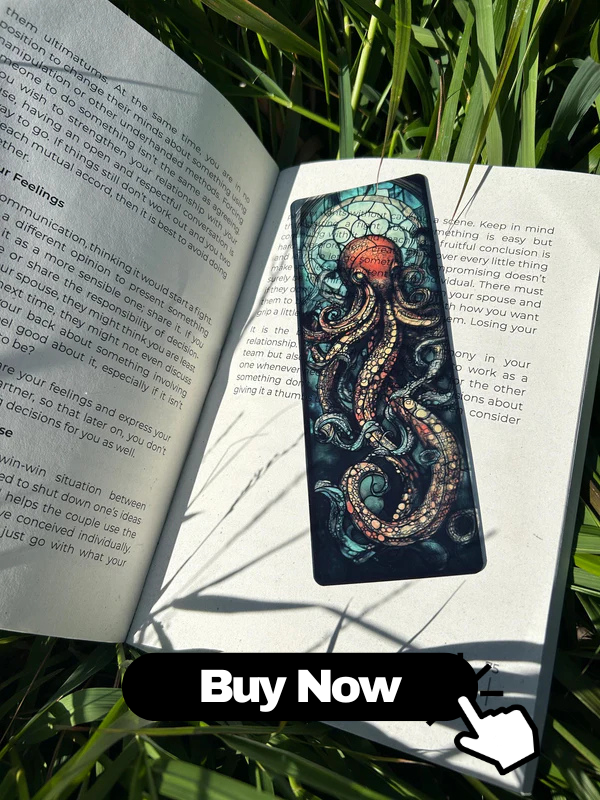
Reading is more enjoyable when your favorite books stay in excellent condition. Yet many readers unknowingly damage their books every day by using thick, bulky, or improvised bookmarks. Understanding how thin bookmarks reduce stress on book bindings can help you preserve your collection, extend the lifespan of your books, and maintain both their aesthetic and structural integrity. This comprehensive guide explains why bookmark thickness matters, how book bindings work, and how to choose the best bookmark materials and designs to protect your books over time.
How Book Bindings Work and Why They Matter
To understand how thin bookmarks protect book bindings, it helps to know what’s happening inside the spine of a book. The binding is a complex structure designed to hold pages together while allowing the book to open and close repeatedly.
Basic Components of a Book Binding
- Spine – The back edge of the book where all the pages are attached.
- Signatures – Groups of pages folded and sewn or glued together.
- Adhesive (glue) – Used in perfect-bound or paperback books to hold pages at the spine.
- Sewing or stitching – Used in higher-quality or hardcover books to attach signatures.
- Endpapers – Sheets that connect the text block to the cover.
- Cover or case – The hard or soft outer layer that protects the pages.
How Bindings Are Designed to Work
Book bindings are optimized for a specific range of motion and pressure:
- They are meant to open and close along the spine’s natural hinge.
- The pages are designed to lie relatively flat without excessive force.
- The adhesive or stitching is engineered for even stress distribution across the spine.
When you insert an object between the pages, especially a thick one, you change the way forces are distributed through the binding. Over time, this can cause cracking, loosening, and page separation. Thin bookmarks minimize this disruption.
Why Bookmark Thickness Matters for Book Health
The thickness of a bookmark directly affects how a closed book behaves. Thick or rigid bookmarks create internal pressure that bindings are not designed to handle.
What Happens When a Bookmark Is Too Thick
- The book cannot close properly, so the spine is held in a slightly forced position.
- Pages around the bookmark curve unnaturally, creating tension on the paper fibers.
- The glue or stitching at the spine is pulled unevenly, especially near the bookmark’s location.
- Repeated opening and closing with a bulky bookmark can weaken the spine and cause visible warping.
How Thin Bookmarks Make a Difference
Thin bookmarks—especially those made from slim, flexible materials—fit between pages with minimal disruption:
- They allow the book to close almost completely flat, maintaining its natural alignment.
- They cause less bulging along the spine and cover.
- They reduce stress concentration at the point where the bookmark is placed.
- They distribute light pressure across a wider area instead of creating a sharp pressure point.
In simple terms, the thinner the bookmark, the less the book has to “fight” to stay closed, which directly reduces stress on the binding.
Mechanical Stress: What Happens Inside the Spine
From a mechanical standpoint, a book with a thick bookmark inside is forced into an unnatural shape. This matters for long-term durability.
Types of Stress on Book Bindings
- Compression – Parts of the spine are squashed as the covers attempt to close over a thick object.
- Tension – Other areas are stretched, especially along the inner hinge, as the pages bend unevenly.
- Shear – Layers of adhesive and paper slide against each other, weakening the bond.
Why Thin Bookmarks Reduce These Stresses
- Lower profile: A thin bookmark barely alters the closed shape of the book, minimizing distortion.
- Less leverage: Thick items create a “wedge” effect, prying pages apart; thin bookmarks do not.
- Smoother contact: Thin, flexible materials conform to the page surface, reducing localized pressure.
By reducing mechanical stress, thin bookmarks help maintain the structural integrity of the spine and prevent premature wear and breakage.
Key Benefits of Using Thin Bookmarks
Choosing thin bookmarks is a small habit with large benefits for the longevity of your library.
1. Extended Lifespan of Books
- Less stress on bindings means fewer cracked spines.
- Pages remain firmly attached, reducing the risk of loose or falling pages.
- Covers stay flatter and more aligned, preserving the book’s original shape.
2. Improved Aesthetic Preservation
- Books stored with thin bookmarks show less warping and bulging on shelves.
- Spine lettering and cover art remain better aligned and less creased.
- Thin bookmarks reduce the chances of indentations or embossing marks on pages.
3. Enhanced Reading Comfort
- Thin bookmarks are less intrusive while reading.
- They slide between pages easily without snagging or tearing.
- You can close the book completely without feeling like you’re forcing it shut.
4. Better Storage and Shelving
- Books with thin bookmarks can be shelved tightly without abnormal gaps.
- There is less pressure transferred to neighboring books on the shelf.
- Your library looks neater and more uniform over time.
Best Materials for Thin, Book-Friendly Bookmarks
The material you choose has a direct effect on both bookmark thickness and how gently it interacts with your books.
Recommended Thin Bookmark Materials
-
High-quality paper (lightweight, acid-free)
- Very thin and flexible.
- Ideal for archival and collectible books.
- Low risk of leaving permanent impressions if not too stiff.
-
Card stock (lightweight)
- Thicker than paper but can still be quite thin.
- Suitable for everyday reading and custom bookmark printing.
- Look for 0.2–0.4 mm thickness where possible.
-
Thin plastic film (e.g., polypropylene)
- Durable, water-resistant, and very thin.
- Good for travel books, cookbooks, and textbooks.
- Should be smooth and flexible to avoid cutting into pages.
-
Metal foil bookmarks (ultra-thin)
- Extremely thin, sometimes under 0.1 mm.
- Strong but must have rounded, smooth edges.
- Ideal for readers who want durability with minimal thickness.
-
Fabric ribbons
- Common in built-in bookmark designs.
- Soft and conform easily to page contours.
- Excellent for hardcovers and journals.
Materials to Use with Caution
-
Leather
- Often thicker and stiffer than ideal.
- May be suitable only if extremely thin and flexible.
-
Wood or bamboo
- Even thin wooden bookmarks can be too rigid.
- Edges can create indentations or pressure points.
-
Thick laminated plastic
- Long-lasting but can be too bulky.
- Risk of warping spines over time.
How to Choose the Right Bookmark for Different Types of Books
Different books have different binding strengths and tolerances. Selecting the right thin bookmark for each type can maximize protection.
For Paperbacks (Perfect-Bound Books)
- Choose very thin, flexible bookmarks (paper, film, ribbon).
- Avoid rigid plastics or metal thicker than a foil.
- Perfect-bound books rely heavily on glue, so reducing spine stress is critical.
For Hardcovers
- High-quality bindings are somewhat more tolerant but still benefit from thin markers.
- Built-in ribbon bookmarks are ideal.
- Thin cardstock or plastic film works well for everyday reading.
For Textbooks and Reference Books
- Use multiple thin bookmarks instead of a single large, thick one.
- Consider color-coded thin tabs or strips for organization.
- Avoid inserting pens, highlighters, or notebooks inside as placeholders.
For Journals and Notebooks
- Opt for slim, unobtrusive bookmarks that don’t interfere with writing.
- Elastic bands with attached ribbons can be convenient if not too tight.
- Integrated ribbon markers are again an excellent choice.
Proper Bookmark Usage to Minimize Binding Stress
Even a thin bookmark can cause damage if used incorrectly. Proper technique further reduces stress on book bindings.
Best Practices
- Insert the bookmark fully between the pages so it lies flat.
- Align the bookmark with the outer edge or the top, not diagonally.
- Close the book gently and check that it closes naturally without resistance.
- Store books upright on a shelf rather than under heavy stacks when a bookmark is inside.
What to Avoid
- Do not use bookmarks that stick out excessively in multiple directions.
- Avoid placing other objects (pens, phones, notes) in the same region as the bookmark.
- Do not bend or fold the book sharply where the bookmark is inserted.
Common Bookmark Mistakes That Damage Book Bindings
Many binding problems come not from reading itself, but from how bookmarks are used. Avoid these common mistakes to keep your books in better condition.
Using Non-Bookmark Objects
- Bulky items like pens, pencils, and highlighters.
- Thick receipts, tickets, or folded papers.
- Electronics (phones, e-readers) as makeshift spacers.
All of these introduce unnecessary thickness and put significant stress on the spine.

Folding Pages Instead of Using a Bookmark
- Dog-earing pages weakens the paper fibers.
- Repeated folding at the same point can lead to tears and missing corners.
- Thin bookmarks remove the need to fold pages at all.
Stacking Heavy Objects on a Book Containing a Thick Bookmark
- Extra weight intensifies the pressure on the spine.
- Over time, this can cause permanent warping or cracks along the inner hinge.
Thin vs. Thick Bookmarks: A Detailed Comparison
To clearly see why thin bookmarks are better for bindings, compare them directly with thicker alternatives.
Thickness and Binding Impact
| Feature | Thin Bookmarks | Thick Bookmarks |
|---|---|---|
| Spine Stress | Low – minimal deformation | High – forced spine curvature |
| Book Closure | Closes almost fully and naturally | Partially open; covers resist closing |
| Page Deformation | Pages stay flat and aligned | Pages curve or bulge around the bookmark |
| Longevity of Binding | Improved – less cumulative damage | Reduced – quicker wear and cracks |
Reader Experience
- Thin bookmarks:
- Feel lightweight and unobtrusive.
- Flip easily with the pages.
- Create clean, precise marks for your place.
- Thick bookmarks:
- Can feel bulky when holding the book.
- May cause the book to snap shut unevenly.
- Often dislodge more easily when carried in bags.
Special Cases: Old, Rare, and Collectible Books
Old and rare books require particular care. For these volumes, the benefits of thin bookmarks are even more significant.
Challenges with Older Bindings
- Adhesives may have become brittle over time.
- Paper fibers are often weaker and more fragile.
- Spines may already show signs of cracking or separation.
Bookmark Recommendations for Rare Books
- Use acid-free, archival-quality paper bookmarks.
- Ensure the bookmark is very thin and cut with smooth edges.
- Avoid any bookmark that is:
- Rigid and thick.
- Coated with adhesive.
- Made of metal with sharp corners.
- Consider using loose leaf markers (such as thin slips) that are placed gently without forcing the book to close tightly at all.
Using Multiple Thin Bookmarks for Study and Research
Students, researchers, and professionals often need to mark many pages at once. Multiple thin bookmarks are far safer than a few thick markers.
Advantages of Multiple Thin Bookmarks
- Distribute pressure across different parts of the book.
- Allow quick navigation to key sections.
- Reduce the temptation to insert bulky objects or large stacks of notes.
Tips for Multi-Bookmark Use
- Use color-coded thin tabs or ribbons for categories or themes.
- Do not place all bookmarks in the exact same vertical position; stagger them slightly.
- Avoid stacking folded papers or sticky-note pads; instead, use single sheets if necessary.
Thin Bookmark Design Ideas That Are Gentle on Books
You can enjoy visually appealing bookmarks without compromising book health. Many bookmark designers now prioritize slim, book-friendly formats.
Design Features That Reduce Binding Stress
- Slim profile – Keep thickness to a minimum.
- Rounded corners – Prevent digging into paper and spine.
- Flexible construction – Allows the bookmark to bend with the pages.
- Smooth surface – Reduces friction and abrasion.
Creative Yet Thin Bookmark Concepts
- Illustrated paper strips – Art printed on slender, high-quality paper.
- Transparent film bookmarks – Easy to see through to the text beneath.
- Magnetic edge bookmarks (only if very thin) – Fold-over designs that clip gently to a page.
- Embossed but not layered designs – Textured surfaces without added bulk.
Caring for Your Thin Bookmarks
Bookmark maintenance helps keep them from becoming thick, bent, or damaging over time.
Storage Tips
- Store unused bookmarks in a flat container or envelope.
- Keep them away from moisture and direct sunlight that can warp or curl them.
- Avoid stacking heavy objects on top of delicate bookmarks.
Condition Checks
- Replace thin bookmarks that have become creased, wrinkled, or torn.
- Discard any bookmark with sharpened or frayed edges that might cut pages.
- If laminating, use minimal lamination thickness to preserve a slim profile.
FAQ: Thin Bookmarks and Book Binding Stress
Do thin bookmarks really make a noticeable difference?
Yes. Over time, using thin, low-profile bookmarks significantly reduces the mechanical stress placed on book spines compared with thick or rigid items. The difference is especially noticeable in frequently used books and paperbacks.
Is a standard laminated bookmark too thick?
Not always, but many laminated bookmarks are thicker than necessary. If your book doesn’t close comfortably over the bookmark, it’s too thick. In that case, a thinner paper or plastic film bookmark is safer for the binding.
Are magnetic bookmarks safe for bindings?
Magnetic bookmarks can be safe if they are very thin and lightweight. However, some designs are quite bulky. Always test by closing the book gently; if there is visible bulging or resistance, choose a thinner option.
Can I leave a bookmark in a book for years?
You can, but it’s best if the bookmark is:
- Thin and flexible, minimizing long-term pressure.
- Acid-free to avoid discoloration.
- Free from adhesives or inks that might transfer or bleed over time.
What is the ideal thickness for a bookmark?
While there is no strict universal standard, many book conservators recommend bookmarks in the range of 0.1–0.4 mm for general use, with the lower end preferred for delicate or old books.
Conclusion: Protecting Your Books with Thin Bookmarks
Thin bookmarks may seem like a small detail, but they play a major role in how well your books age. By understanding how thin bookmarks reduce stress on book bindings, you can make simple choices that preserve both the structural integrity and appearance of your library.
- Choose thin, flexible bookmark materials such as quality paper, film, or ribbon.
- Avoid bulky, rigid, or improvised placeholders that force the book to stay open unnaturally.
- Use multiple thin bookmarks for reference-heavy reading instead of one thick object.
- Handle and insert bookmarks carefully to maintain minimal stress on the spine.
By adopting thin, book-friendly bookmarks and mindful usage habits, you not only enjoy a smoother reading experience but also ensure that your favorite volumes remain intact, attractive, and enjoyable for many years to come.