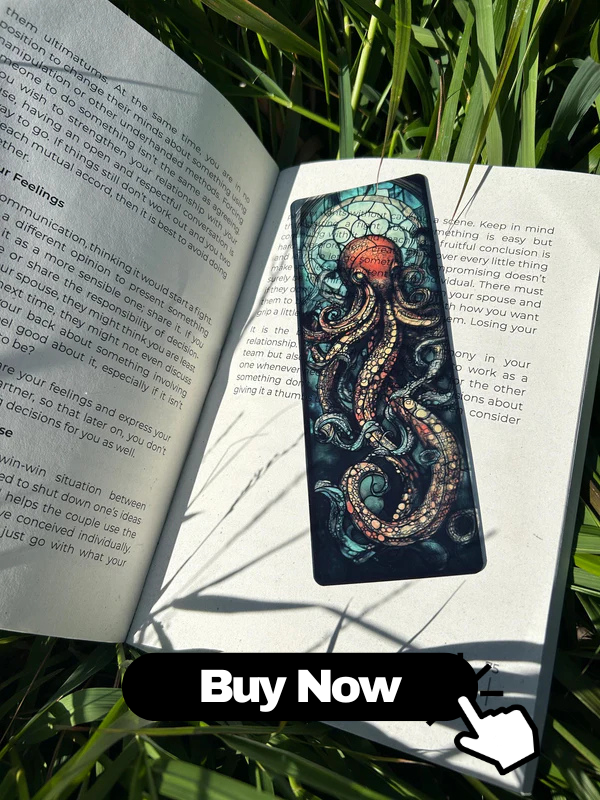
Bookmarks might seem like simple placeholders, but the choice between thin bookmarks and thick bookmarks can significantly affect your reading comfort, page safety, and even the overall aesthetics of your books. In this detailed guide, we’ll explore the differences between thin and thick bookmarks, their pros and cons, the best materials, and how to choose the right style for your reading habits, book type, and personal preferences.
What Are Thin and Thick Bookmarks?
When people talk about thin bookmarks vs thick bookmarks, they’re usually referring to the physical thickness of the material used to mark pages. This thickness affects how the bookmark feels, how it sits in the book, and how it interacts with the pages.
-
Thin bookmarks:
- Usually made from paper, thin card stock, plastic film, or metal strips
- Often have a thickness similar to one or two pages of a book
- Designed to be minimal, flexible, and low-profile
-
Thick bookmarks:
- Made from heavy card stock, laminated paper, leather, wood, fabric, or acrylic
- Noticeably bulkier than the pages they sit between
- Designed for durability, aesthetics, and tactile presence
Understanding these differences is essential if you care about book preservation, reading comfort, bookmark durability, and bookmark design. Whether you’re a casual reader, a student, or a book collector, the thickness of your bookmark can influence your entire reading experience.
Advantages of Thin Bookmarks
Thin bookmarks are popular among readers who want a subtle, lightweight way to mark their place. They are especially favored for paperbacks, textbooks, and travel reading.
Key Benefits of Thin Bookmarks
-
Less strain on the book spine
- Thin bookmarks add minimal bulk between pages.
- They help keep the book spine from stretching or cracking.
- Ideal for older or fragile books that need gentle handling.
-
Reduced page warping
- Because they are flat and light, they conform closely to pages.
- This reduces the risk of permanent indentations or page bending.
-
Lightweight and portable
- Perfect for on-the-go reading, travel, and small bags.
- You can carry multiple thin bookmarks without adding noticeable weight.
-
Better for multi-page marking
- Readers who mark several sections at once (students, researchers, editors) can use many thin bookmarks without excessively bulking up the book.
- Great for creating a color-coded bookmark system.
-
Often inexpensive or even free
- Thin paper bookmarks are commonly given away by bookstores, libraries, and publishers.
- Easy to replace if lost or damaged.
When Thin Bookmarks Are Especially Useful
- Delicate or antique books that cannot tolerate pressure
- Thick novels where added bulk would make reading uncomfortable
- Study sessions requiring many simultaneous page markers
- Travel reading where minimizing weight and volume matters
Disadvantages of Thin Bookmarks
Although thin bookmarks are gentle on books and very practical, they also come with some limitations.
-
Less durable
- Paper and ultra-thin materials can tear, crease, or fray easily.
- They might not withstand frequent use or rough handling in backpacks.
-
Easier to lose
- Thin bookmarks can slip between pages or fall out unnoticed.
- They are often less visible when the book is closed.
-
Less tactile and decorative
- If you enjoy bookmarks as collectible art pieces or gifts, thin designs may feel less special.
- They may not stand out much on a shelf or coffee table.
-
Limited support for heavy or glossy pages
- In large art books or coffee table books, thin bookmarks can feel too delicate.
- They may slide more easily out of glossy or coated pages.
Advantages of Thick Bookmarks
Thick bookmarks appeal to readers who want something sturdy, decorative, and long-lasting. They are often chosen for their feel, appearance, and durability.
Key Benefits of Thick Bookmarks
-
High durability
- Materials like laminated card, leather, wood, or metal can last for years.
- Resist bending, tearing, and general wear.
-
Premium, gift-worthy feel
- Thick bookmarks often look and feel luxurious and substantial.
- Commonly used as gift bookmarks for book lovers.
-
Easy to find and handle
- Their thickness and weight make them harder to misplace.
- Easier to grab quickly when opening a book.
-
Excellent for display and personalization
- More space for artwork, quotes, branding, or personalization.
- Ideal for collectors, book subscription boxes, and special editions.
-
Better for large or heavy books
- In large hardcovers or coffee table books, thick bookmarks provide a solid marker that stays in place.
- Great for photo books, albums, and reference volumes.
Disadvantages of Thick Bookmarks
Despite their strengths, thick bookmarks are not perfect for every type of book or reader.
-
Can stress the book spine
- Thick bookmarks create a visible gap between pages.
- Over time, this can contribute to spine fatigue, loosening, or cracking, especially in paperbacks.
-
May cause page bending or impressions
- Stiff or very rigid bookmarks can leave indentations on softer pages.
- Thicker materials may compress nearby pages unevenly.
-
Adds bulk and weight
- Carrying several thick bookmarks can noticeably increase the thickness of a book or bag.
- Less practical for readers who travel light or read on the go.
-
Less ideal for multiple markers
- Using many thick bookmarks in a single book can make it feel overstuffed and hard to close.
- Students and researchers who need numerous markers may find them impractical.
Best Materials for Thin Bookmarks
The material of a thin bookmark plays a crucial role in its durability, flexibility, and book-friendliness. Here are common thin bookmark materials and their characteristics.
-
Standard paper
- Very thin and gentle on pages.
- Often used for promotional bookmarks.
- Can be easily damaged if not handled carefully.
-
Thin card stock
- More durable than standard paper, but still low profile.
- Good balance between flexibility and strength.
- Ideal for everyday reading.
-
Laminated paper
- Thin, but with a protective plastic coating.
- Resistant to moisture, smudges, and tearing.
- Slightly thicker than raw paper, but still considered “thin” by most readers.
-
Thin plastic film bookmarks
- Flexible and semi-transparent in many cases.
- Excellent at sliding between pages without damage.
- Durable and resistant to everyday wear.
-
Metal strip bookmarks (ultra-thin)
- Very slim and extremely durable.
- Often made from stainless steel or aluminum.
- Should be used carefully to avoid scratching delicate paper.
-
Magnetic corner bookmarks (thin style)
- Fold over the page corner with slim magnets.
- Secure and unlikely to fall out.
- Some designs are very thin; others can be thicker—check individual products.
Best Materials for Thick Bookmarks
Thick bookmarks are often chosen for their premium appearance, durability, and decorative qualities. The material largely determines the bookmark’s personality and performance.
-
Heavy card stock
- Common in gift bookmarks, souvenir bookmarks, and art bookmarks.
- Stiff enough to feel solid, but still relatively book-friendly if not too thick.
- Often combined with laminate for extra durability.
-
Laminated heavy card
- Rigid and long-lasting.
- Excellent for vibrant prints and illustrations.
- Can be quite thick; best suited to hardcover or sturdy paperbacks.
-
Leather or faux leather
- Flexible, durable, and luxurious to the touch.
- Conforms better to the curve of the book spine than rigid materials.
- Available in minimalist designs or embossed, tasseled variants.
-
Wooden bookmarks
- Visually striking and unique.
- Best when made from thin, smooth, and well-finished wood.
- Should be used mainly in sturdy hardcovers to avoid page impressions.
-
Acrylic and resin bookmarks
- Available in transparent, colored, or embedded designs (e.g., dried flowers).
- Rigid and sometimes heavier than paper or leather.
- Ideal as decorative pieces for display copies or coffee table books.
-
Fabric bookmarks (thick woven or padded)
- Include ribbons with beads, woven textiles, and padded fabric strips.
- Can be soft and book-friendly if not overly bulky.
- Good choice for those who like a tactile, cozy aesthetic.
How Thin vs Thick Bookmarks Affect Book Protection
If you care about book preservation, page quality, and spine longevity, the thickness of your bookmark matters. Both thin and thick bookmarks can be safe if used correctly, but each carries different risks and benefits.
Impact of Thin Bookmarks on Books
- Generally safer for spines because they add minimal separation between pages.
- Less likely to cause impressions or indentations on the paper surface.
- If made from acidic or low-quality paper, they can yellow over time and potentially transfer discoloration to pages—especially in long-term storage.
Impact of Thick Bookmarks on Books
- More pressure on the binding when the book is closed tightly around a thick, rigid insert.
- Potential for visible ridge lines to form in the paper where the bookmark rests.
- Safer in sturdy hardcovers than in thin paperbacks or mass-market editions.
Best Practices to Protect Your Books
- Match bookmark thickness to the book’s construction:
- Use thin, flexible bookmarks for small paperbacks and delicate books.
- Reserve thick bookmarks for robust hardcovers and coffee table books.
- Avoid slamming or tightly compressing the book closed around any bookmark.
- Keep bookmarks fully inside the book to avoid pressure on edges and corners.
- Choose acid-free materials for long-term use in collectible or archival books.
Matching Bookmark Thickness to Your Reading Style
Your ideal bookmark is not just about what is “better” in general; it’s about what is better for your habits, goals, and reading environment.
If You Are a Casual Fiction Reader
- Best options:
- Thin card stock or laminated thin bookmarks for everyday novels.
- Single medium-thick bookmark for a favorite book or series.
- Why:
- You typically need just one reliable marker per book.
- Comfort and subtlety often matter more than decoration.
If You Are a Student or Researcher
- Best options:
- Thin bookmarks made from paper, tabs, or plastic film.
- Color-coded or labeled bookmarks to mark multiple chapters or topics.
- Why:
- You may need to mark many pages at once without making the book bulky.
- Thin bookmarks allow for quick flipping and scanning.
If You Are a Collector or Book Aesthetic Enthusiast
- Best options:
- Thick, decorative bookmarks (leather, wood, acrylic) for display copies.
- Thin archival-safe bookmarks for rare or antique books.
- Why:
- Decorative thick bookmarks enhance the visual appeal of your shelves.
- Archival-quality thin bookmarks protect valuable books from damage.
If You Read While Traveling
- Best options:
- Thin, durable laminated bookmarks or magnetic bookmarks.
- Avoid very rigid, heavy bookmarks that may get bent or lost en route.
- Why:
- Thin, tough materials are lightweight and resilient.
- Magnetic bookmarks help prevent accidental loss in transit.
Aesthetic and Design Considerations
Beyond function, bookmarks are also a form of personal expression. Thickness can influence the design possibilities and visual impact.
Design Strengths of Thin Bookmarks
- Minimalist aesthetic that doesn’t distract from the book itself.
- Perfect for delicate artwork, line drawings, and subtle patterns.
- Easy to store multiple designs in a small space.
Design Strengths of Thick Bookmarks
- More space and stability for bold artwork, typography, and textures.
- Can incorporate embossing, foil stamping, tassels, beads, or cut-outs.
- Look impressive as gifts, collectibles, or branded items.
Choosing Style Based on Aesthetics
- Decide whether you prefer a subtle or statement piece in your book.
- Consider whether your bookmark will be:
- Used privately for function, or
- Displayed and seen by others (e.g., on coffee tables or bookshelves).
- Match bookmark colors and textures to:
- Your favorite genres (e.g., dark leather for fantasy, bright acrylic for YA).
- Your room or shelf décor for a consistent visual theme.
Special Use Cases: Study, Journaling, and Collectors
For Study and Academic Reading
- Thin bookmarks and sticky tabs are usually superior.
- They allow:
- Multiple reference points without bulking the book.
- Color-coding for themes, topics, and exam sections.
- Thick bookmarks may be reserved for:
- Your main reading place.
- A favorite or frequently revisited chapter.
For Journaling and Planners
- Many people use:
- Thin ribbon bookmarks sewn into the notebook.
- Magnetic rulers or tabs that double as measuring tools.
- Thicker bookmarks can:
- Serve as stencils or templates for bullet journaling.
- Be used in ring planners where spine stress is less of a concern.
For Book Collectors and Rare Editions
- Prioritize:
- Archival-quality, acid-free thin bookmarks.
- Materials tested to avoid chemical reactions or staining over time.
- Consider:
- Storing thick decorative bookmarks outside the book, on display.
- Using thin, inert placeholders only temporarily when reading.
Care and Maintenance of Different Bookmark Types
Taking care of your bookmarks ensures they last longer and remain safe for your books, whether they are thin or thick.

Caring for Thin Bookmarks
- Avoid folding or crumpling, especially with paper types.
- Store spares in a flat container or envelope to prevent warping.
- Keep away from moisture and direct sunlight to avoid fading and discoloration.
- For laminated thin bookmarks, wipe gently with a soft, dry cloth if they get dirty.
Caring for Thick Bookmarks
- Do not force thick bookmarks into very tight bindings.
- For leather:
- Keep away from excess moisture.
- Optionally treat with a leather conditioner occasionally.
- For wood:
- Avoid extreme humidity.
- Ensure the surface is smooth; lightly sand if rough areas appear.
- For acrylic or resin:
- Store in a soft pouch to prevent scratches.
- Clean gently with a microfiber cloth.
Eco-Friendly and Sustainable Bookmark Choices
Sustainability is increasingly important in book and stationery culture. Both thin and thick bookmarks can be chosen with the environment in mind.
Eco-Friendly Thin Bookmarks
- Recycled paper or card stock with eco-friendly inks.
- Bamboo or plant-based plastic films designed to be biodegradable.
- DIY bookmarks made from:
- Old greeting cards
- Reused packaging with interesting designs
- Scrapbook leftovers
Eco-Friendly Thick Bookmarks
- Plant-tanned leather or high-quality faux leather intended for long-term use.
- Responsibly sourced wood with non-toxic finishes.
- Durable bookmarks designed to replace many disposable paper bookmarks over time.
Sustainability Tips
- Choose bookmarks you will use for years, not just days.
- Repurpose materials around you into bookmarks instead of buying new, when possible.
- Donate or share extra bookmarks with friends, libraries, or book clubs.
FAQ: Thin Bookmarks vs Thick Bookmarks
Are thin bookmarks better for all books?
Not always. Thin bookmarks are typically better for paperbacks and delicate books because they reduce spine stress. However, thick, sturdy bookmarks can be ideal for large hardcovers and coffee table books where durability and visibility matter more.
Can thick bookmarks damage my books?
They can, if they are too rigid or too thick for the book’s binding. Over time, forcing a thick bookmark into a tight paperback can cause spine strain, page warping, or indentations. Used with care and matched to the right book type, they are generally safe.
Are metal bookmarks safe to use?
Metal bookmarks can be very thin and durable, but they are also less forgiving than paper or leather. To keep them book-safe:
- Ensure edges are smooth and rounded.
- Avoid dragging them across delicate or brittle pages.
- Use them mostly in sturdy, modern books.
How many bookmarks can I use in one book?
There is no strict limit, but consider:
- With thin bookmarks, you can often use many without major issues.
- With thick bookmarks, using more than one or two can make the book hard to close properly.
Monitor how your book feels and looks; if the spine or pages begin to warp, reduce the number of bookmarks.
Which is better for children’s books: thin or thick bookmarks?
For children, slightly thicker, durable bookmarks may be more practical because they are:
- Less likely to tear.
- More visible and fun, especially in colorful designs.
However, for very thin children’s paperbacks, choose medium-thin, rounded-edge bookmarks to avoid damage.
Conclusion: Which Bookmark Thickness Is Best for You?
Choosing between thin bookmarks and thick bookmarks comes down to balancing:
- Book safety – preserving spines and pages
- Reading comfort – how the book feels in your hands
- Durability and aesthetics – how long the bookmark lasts and how it looks
- Personal style and use case – casual reading, studying, collecting, or gifting
In general:
- Choose thin bookmarks if you:
- Read fragile or tightly bound paperbacks.
- Need many markers for studying or research.
- Prefer a subtle, lightweight, book-friendly solution.
- Choose thick bookmarks if you:
- Use mainly strong hardcovers or large coffee table books.
- Value long-lasting, decorative, or gift-worthy designs.
- Want a bookmark that feels solid and easy to find.
Ultimately, the best approach is to build a small collection of both thin and thick bookmarks and match each one to the type of book and reading situation. By understanding how bookmark thickness influences your books and your reading experience, you can make more informed choices and enjoy a more comfortable, personalized, and book-safe reading life.